

 See My Latest Article on HelloNation
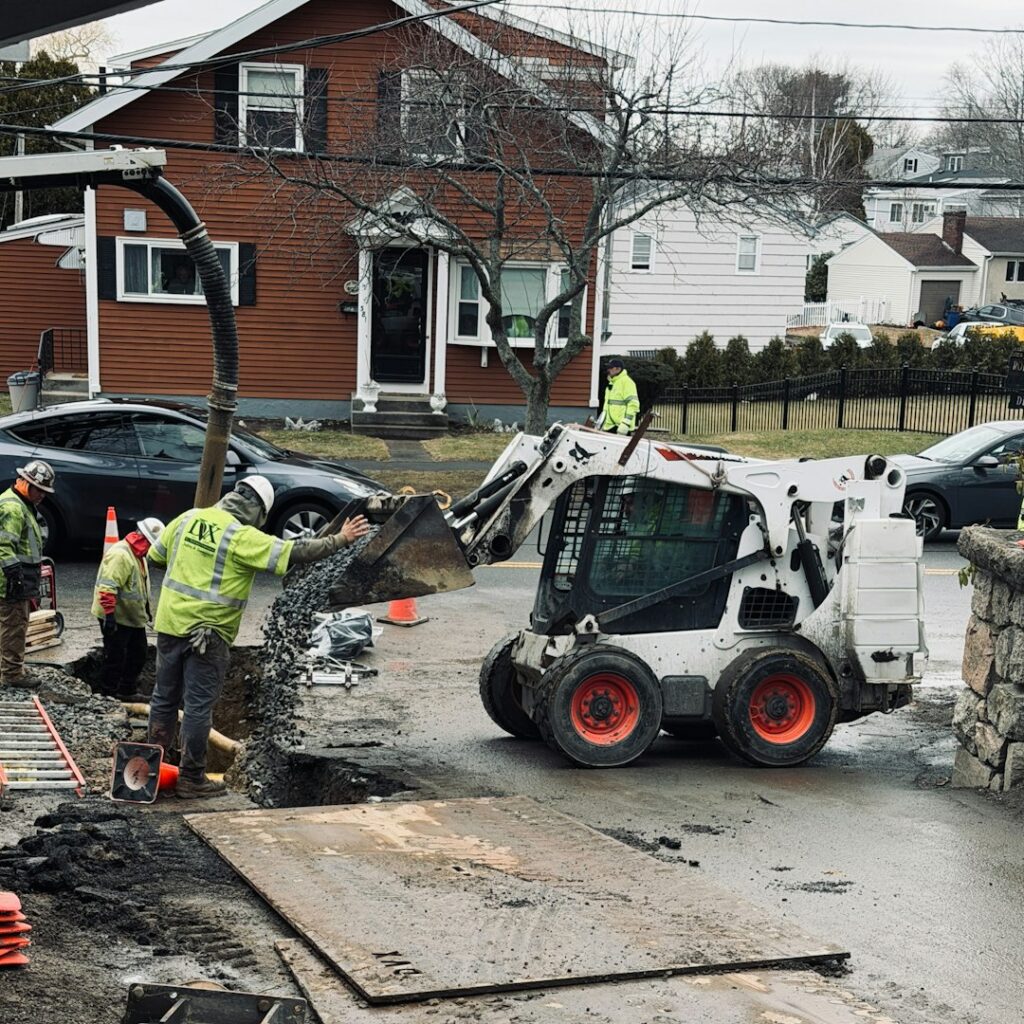
Sunken concrete is common around driveways, sidewalks, patios, garage approaches, and basement walkouts. The right repair depends on why the slab moved, how far it dropped, whether it is cracked, and what the surface needs to support.
In Madison, seasonal freezing and thawing can expose weaknesses in the soil beneath concrete. Water may enter small gaps, soften poorly compacted fill, or freeze and expand beneath the slab. The result can be a surface that slopes toward a building, creates a tripping edge, holds water, or separates from nearby concrete.
Why does concrete sink?
Sunken concrete usually reflects movement or loss of support beneath the slab rather than a problem with the concrete alone. Several causes may be involved:
- Poorly compacted fill: Soil placed during construction may settle gradually, leaving a void below the slab.
- Erosion: Water can wash soil away through cracks, joints, or edges, especially where downspouts or surface drainage direct water toward the pavement.
- Freeze-thaw movement: Moisture in the soil can freeze, expand, and later thaw. Repeated cycles may shift slabs or enlarge existing gaps.
- Changes in drainage: Roof runoff, plumbing leaks, grading changes, and saturated soil can alter the support beneath concrete.
- Tree roots or landscape changes: Roots can displace some slabs, while removed vegetation can change how soil holds moisture.
- Overloading: Concrete designed for foot traffic may settle or crack when regularly exposed to vehicles or equipment.
A slab that has dropped evenly may have lost underlying support. A slab that is tilted, broken into several pieces, or pushed upward may require a different solution.
Can sunken concrete be leveled without removing it?
Yes. Some slabs can be raised or stabilized without full removal. The main methods are slabjacking and polyurethane foam lifting, although neither is appropriate for every situation.
The goal is not simply to lift the concrete. A durable repair must also address the empty or weak space beneath it and reduce the chance of continued movement.
How does slabjacking work?
Slabjacking, sometimes called mudjacking, raises concrete by pumping a cement-based material through small holes drilled in the slab. The material fills voids and applies upward pressure until the surface reaches a more suitable elevation.
This method may be considered for:
- Concrete slabs that are mostly intact
- Driveway sections, walkways, garage approaches, and patios
- Areas where filling a substantial void is necessary
- Projects where a heavier lifting material is acceptable
Slabjacking material is heavier than foam. That can be useful when a larger void needs filling, but it also adds weight to the soil. If the underlying soil is very weak, saturated, or continuing to erode, lifting the slab may not solve the original problem.
The drilled holes are typically patched afterward. The patches may remain visible, and the finished appearance depends on the existing concrete, patch color, and surface texture.
How does polyurethane foam lifting differ?
Polyurethane foam lifting uses expanding foam injected through smaller holes. The foam expands beneath the slab, fills voids, and provides upward pressure.
Potential advantages include:
- Smaller injection holes
- Lower added weight than cement-based lifting material
- Less disruption to landscaping in some situations
- Quick return to use compared with a full replacement project
Foam lifting still depends on the condition of the slab and the soil. Expansion must be carefully controlled, particularly near steps, door thresholds, garage floors, foundation walls, and underground utilities. Foam can raise a slab, but it does not automatically correct poor drainage or prevent future erosion.
The material also may not be suitable where the concrete is badly fractured, where large sections are missing, or where the base needs to be rebuilt.
When is replacement a better option?
Replacement is often more appropriate when the slab is badly cracked, unstable, broken into multiple pieces, or no longer has a practical shape or slope. Removing the concrete allows the underlying soil and aggregate base to be inspected and rebuilt.
Replacement may be the better choice when:
- Large cracks divide the slab into separate sections
- Edges are crumbling or severely deteriorated
- The concrete has settled in several different directions
- The surface must be redesigned for drainage
- The slab is too thin or poorly reinforced for its use
- A garage floor, foundation-adjacent area, or structural connection is involved
- Previous lifting repairs did not hold
- The area is being changed for accessibility or a new layout

A replacement project should include attention to the base beneath the concrete. Removing and repouring the slab without correcting weak fill, water flow, or inadequate compaction can lead to another round of settlement.
Can cracks be repaired instead of lifting or replacing the slab?
Crack repair can improve appearance and limit water entry, but it does not correct a height difference or restore lost support. A crack that is narrow and stable may be suitable for sealing. A wide, uneven, or moving crack may indicate a deeper problem.
Surface patching alone is unlikely to solve:
- A tripping edge between slab sections
- Water draining toward a house
- A hollow area beneath the concrete
- Continued vertical movement
- A slab that rocks under foot or vehicle traffic
Crack repair is most useful after determining whether the slab is still moving and whether water is reaching the base.
How should homeowners compare the options?
Start with the condition of the entire area rather than focusing on the lowest point. Check whether the slab:
- Sits higher or lower than adjacent concrete
- Slopes toward a foundation, basement entrance, or garage
- Holds water after rain or snowmelt
- Has open joints or soil gaps along its edges
- Moves when walked or driven on
- Shows fresh cracking or signs of recent settlement
- Has nearby downspouts, irrigation, or plumbing that may be affecting the soil
The amount of settlement matters, but it is not the only factor. A small drop beside a doorway can create a significant water or tripping issue, while a larger drop in a low-use garden walkway may be less urgent.
Photographs taken at different times can help show whether movement is continuing. A straightedge, level, or consistent reference point can also reveal changes, although measurements should not replace an evaluation of drainage and soil conditions.
What Madison’s climate means for timing and durability
The seasonal cycle in Madison can affect both diagnosis and repair planning. Concrete may appear more uneven after winter, but the visible change may reflect soil movement, moisture, or frost-related displacement below the slab.
Repairs generally require suitable ground and air conditions. Cold temperatures, frozen soil, heavy rain, and saturated ground can interfere with lifting, excavation, base preparation, curing, or final grading. A surface that looks level immediately after a repair still needs proper drainage and a stable base to perform well through future freeze-thaw cycles.
Managing water is especially important. Downspouts should discharge away from slabs and foundations, and soil should not remain saturated against concrete edges. Correcting the source of water may be necessary before or alongside leveling.
Are there safety or code concerns?
A settled sidewalk, step, or driveway edge can create a fall hazard. Uneven surfaces near garage doors, basement entrances, and foundations may also direct water where it can cause damage.
Work near underground utilities, foundation walls, retaining structures, public sidewalks, or shared property boundaries may require additional caution or local compliance checks. Structural concerns, major drainage problems, exposed utilities, and concrete connected to a building should not be treated as simple cosmetic repairs.
The practical choice is usually the one that matches the cause of settlement, the condition of the slab, the required drainage, and the expected loads. Leveling can be effective when the concrete remains sound and the supporting problem is manageable. Replacement is more suitable when the slab is broken, the base must be rebuilt, or the area needs a different slope or design.