

 See My Latest Article on HelloNation
What Are the First Indicators of Concrete Driveway Problems?
Small cracks, slight settling, and surface discoloration are often the first clues your driveway may need attention. Early signs can be subtle and easy to overlook, especially after the freeze-thaw cycles common in Madison, WI. Residents sometimes notice these changes while shoveling snow in winter or performing routine maintenance in spring.
Some issues to watch for include:
- Thin, hairline cracks running across the surface or along joints
- Sections where concrete has shifted or settled at different heights (known as “heaving” or “settling”)
- New or expanding areas with a white, powdery residue (called “efflorescence”)
These minor warning signs can develop into larger concerns if local weather continues to impact your driveway untreated.
How Do Midwest Seasons Affect Driveway Wear?
The Midwest’s seasons, particularly the cold and wet winters of Madison, create unique stress on concrete driveways. When moisture seeps into small cracks and freezes, it expands, causing the cracks to widen or deepen. This freeze-thaw action is a primary reason driveways here may deteriorate quicker than in milder climates.
Residents should also be aware that road salts, used for winter ice management, can contribute to surface pitting or flaking over time. High-traffic driveways might show signs of aggregate (the small stones within the concrete) becoming visible as the top layer erodes.
Are All Cracks a Problem?
Not every crack signals major trouble, but patterns and size matter.
- Fine, hairline cracks (less than 1/8 inch wide) that are stable and do not noticeably change shape may not require immediate repair. These are often shrinkage cracks and common in many driveways.
- Wider cracks (more than 1/4 inch) or cracks that form a grid pattern, run deep, or continue to grow through the year are worth addressing. These suggest movement beneath the slab or structural weakness due to shifting soils, repeated frost action, or inadequate initial installation.
Diagonal cracks, especially those that are uneven at the edges (meaning one side is higher than the other), usually indicate settling from soil movement and may become a tripping hazard.
Can Discoloration and Surface Erosion Signal a Larger Issue?
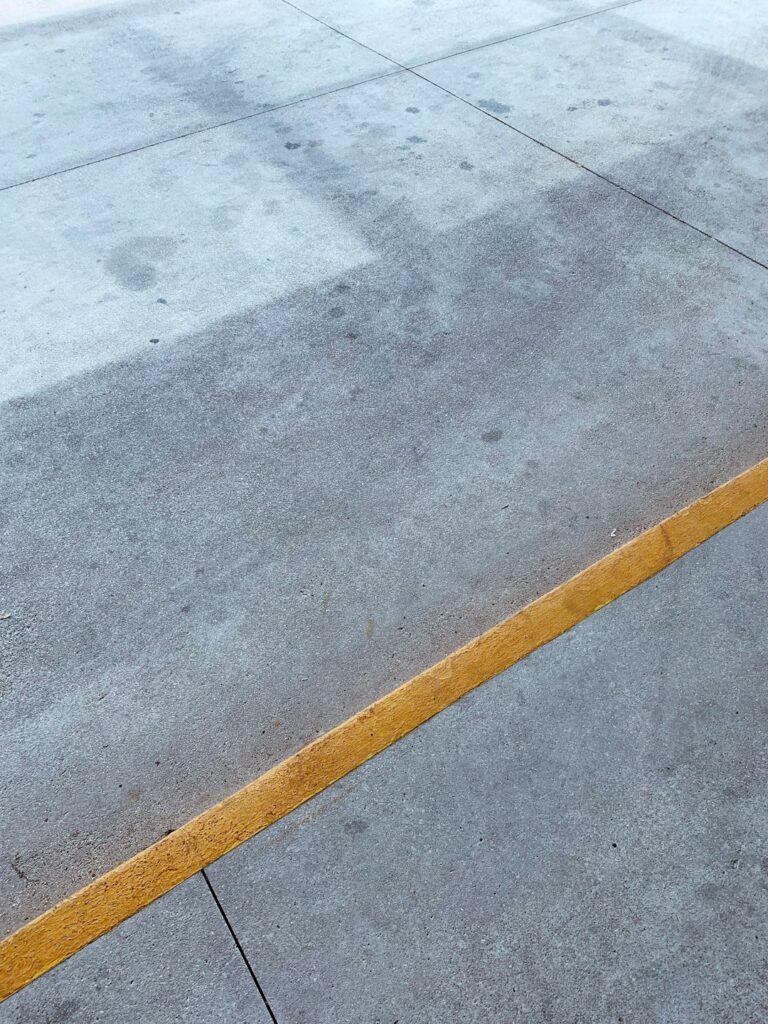
Surface discoloration, such as dark patches, rust stains, or persistent damp spots, can point to drainage or material issues. In Madison, long-term moisture retention might indicate that water isn’t draining properly, leading to freeze-thaw damage. Stubborn wet areas or moss growth signal drainage is not adequate, often due to low spots where runoff collects.
Surface scaling, where the top concrete layer flakes away in small chips, is a common result of winter salt use or poorly cured concrete. While this may appear cosmetic at first, it can accelerate deeper structural wear if left unaddressed.
What Role Does Concrete Settling or Lifting Play?
Uneven surfaces, sloping sections, or areas that rock when weight is applied indicate the base beneath the concrete has shifted. Madison’s freeze-thaw cycles and clay-heavy local soils make driveways especially prone to this type of movement.
Sunken spots near garage entries or the street edge, or locations where rainwater pools, suggest settling or erosion beneath the driveway. Raised or “heaved” areas, on the other hand, often appear after the ground swells during spring thaws.

Both conditions can undermine the stability of your driveway, create trip hazards, and lead to water seeping beneath the slab, which increases the risk of further damage over time.
When Should Safety Be a Concern?
Safety is a priority if:
- Cracks or lifted sections create trip hazards near walkways or entrances
- The driveway slab has shifted so much that vehicle clearance or tire alignment is affected
- Chunks of concrete have broken loose and become projectiles with traffic or during snow removal
Local building codes require certain standards for flatwork like driveways, especially where surfaces meet public sidewalks. Issues that could compromise pedestrian safety or property access should not be ignored.
Do Repair Needs Differ for Older vs. Newer Driveways?
Older concrete driveways are more likely to have multiple types of damage, such as deep cracks, widespread pitting, or sections that have visibly sunk. For driveways installed more recently, even small signs like early surface flaking or minor shifting may suggest underlying drainage or installation concerns common in rapidly developed areas of Madison.
Regardless of age, keep in mind Madison’s specific climate means concrete wear can progress quickly from minor to major within just a few years, especially in areas exposed to plows or heavy salting each winter.
Common Misconceptions About Driveway Upkeep
Some local homeowners believe driveway cracks are only a cosmetic problem or that freezing weather will “fix” loose sections by re-freezing moisture. In reality, untreated cracks commonly widen as ice expands, and loose sections are often a symptom of underlying support loss—not something that improves over time.
Another frequent misconception is that routine patching alone will stop all damage. While patching can improve appearance and prevent moisture intrusion, it does not address causes like sub-base erosion or poor drainage, which are best identified early.