

 See My Latest Article on HelloNation
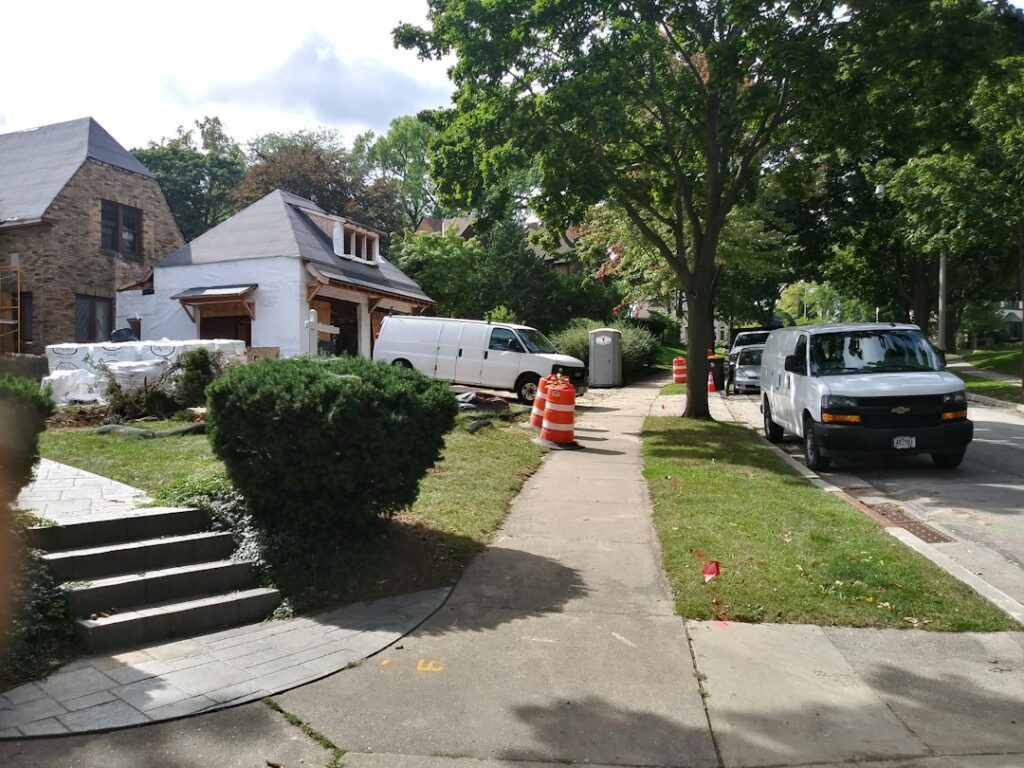
Concrete expansion joints are intentional gaps placed between slabs or between concrete and another structure. They give the material room to move as temperatures and moisture conditions change, helping reduce cracking, pressure, and uneven lifting.
For homeowners planning concrete removal and replacement, understanding these joints helps explain why a new sidewalk, driveway, patio, or garage floor may be divided into separate sections rather than poured as one continuous surface.
What is a concrete expansion joint?
A concrete expansion joint is a full-depth separation filled with a flexible material. The filler is commonly made from resilient foam, rubber-like material, or another compressible product that can absorb movement.
Concrete expands slightly during warm weather and contracts as temperatures fall. It also responds to moisture changes and movement in the supporting soil. Without space to relieve that pressure, the slab may push against a building foundation, curb, step, wall, or neighboring slab.
Expansion joints are different from ordinary cracks and different from most saw-cut lines.
- Expansion joints create separation and allow movement between adjacent structures or concrete sections.
- Contraction joints, often called control joints, create a planned weak line where shrinkage cracking is encouraged to occur.
- Construction joints are formed where one concrete pour ends and another begins.
- Random cracks develop where stress was not adequately controlled or where soil, water, freezing, or structural problems affected the slab.
The visible dark line around a sidewalk, driveway edge, porch step, or foundation is often an expansion joint. It may be narrow, recessed, or partly covered with sealant.
Why do expansion joints matter in Madison, WI?
Expansion joints are especially useful in climates with substantial seasonal change. Concrete surfaces in this area experience warm summer temperatures, freezing winter conditions, repeated freeze-thaw cycles, snow and ice, and changes in soil moisture.
During winter, water can enter small openings in or beneath a slab and freeze. Frozen water occupies more space than liquid water, which can contribute to lifting or shifting. When the ground thaws, portions of the slab may settle unevenly. These seasonal movements do not always cause immediate failure, but they can gradually widen gaps, break edges, or create trip hazards.
The joint also protects structures that move differently. A concrete sidewalk may expand at a different rate than a masonry wall. A driveway apron may respond differently than a curb. A patio may settle independently from a home foundation. Separating these elements reduces the chance that movement in one will transfer damaging pressure to another.
Madison construction specifications commonly call for expansion material where sidewalks or driveways meet buildings, curbs, ramps, steps, and other rigid structures. Local specifications also use planned slab divisions to limit the size of individual concrete sections.
Where should expansion joints be used?
Expansion joints are generally placed wherever a concrete surface meets a fixed structure or another section that may move independently. Common locations include:
- Between a sidewalk and a building foundation
- Between a driveway and a garage floor or foundation wall
- Around porch steps, retaining walls, and masonry structures
- Between a sidewalk and curb or driveway apron
- Around utility structures, posts, drains, or other fixed objects
- At transitions between separate concrete pours
- Along long runs of sidewalk or pavement where movement needs to be divided
The exact layout depends on the slab’s size, thickness, shape, reinforcement, exposure, drainage, and relationship to nearby structures. Expansion joints should not be treated as a decorative choice. Their placement is part of the slab’s movement and crack-control plan.
Are expansion joints the same as control joints?
No. The terms are often used interchangeably in casual conversation, but they serve different purposes.
A control joint is usually a tooled or saw-cut groove that creates a weakened plane in the concrete. As the slab shrinks during curing and drying, cracking is encouraged to occur beneath that line instead of randomly across the surface. The joint may not separate the concrete all the way through.
An expansion joint is intended to separate adjoining elements through the full thickness of the concrete. Its flexible filler allows one section to move without pushing directly against the next.
A driveway or sidewalk replacement may need both types. Expansion joints separate the slab from buildings, curbs, steps, and other fixed features. Control joints divide the slab into manageable panels and guide normal shrinkage cracking.
What happens when an expansion joint fails?
A joint may deteriorate when its filler becomes brittle, pulls away, compresses permanently, or breaks down from water, ice, traffic, or repeated movement. Soil can also wash into the gap, allowing the edges to settle or lose support.
Common warning signs include:
- Concrete edges that chip or crumble beside the joint
- A gap that has widened or become uneven
- Sealant that is cracked, loose, or missing
- Water collecting along the joint
- One slab sitting noticeably higher than the adjoining slab
- A joint that has filled with soil, weeds, or debris
- Cracks extending outward from the joint into the slab

A worn joint does not always mean the entire concrete surface needs replacement. Cleaning and replacing deteriorated joint material may be appropriate when the slabs remain stable, properly supported, and free of major structural damage. Replacement becomes more likely when the concrete is badly tilted, repeatedly sinking, severely cracked, or creating a safety problem.
Should expansion joints be sealed?
Sealing may help limit water and debris from entering a joint, but not every joint should be sealed in the same way. The material must remain flexible and bond properly to the concrete edges. A rigid filler or hard patch can defeat the purpose of the joint by preventing movement.
Some municipal sidewalk specifications leave certain joints unsealed while requiring sealant at specific locations, such as joints along buildings or exposed concrete features. That distinction reflects the joint’s function, exposure, and maintenance needs.
A sealant should not simply be spread over a dirty, damp, or unstable joint. Loose material must be removed, the concrete edges need to be sound, and the joint must have enough depth and width for the sealant system being used. Filling a moving joint with rigid cement patching material often leads to renewed cracking.
What should homeowners look for during concrete replacement?
Before a new slab is poured, observe how the proposed work relates to nearby structures. Useful questions include:
- Where will the expansion joints be located?
- Will the joints extend through the full slab thickness where separation is needed?
- How will the new concrete meet the foundation, curb, steps, or garage floor?
- Are control joints being placed to divide large areas into practical panels?
- Is water directed away from the building and toward appropriate drainage?
- Has unstable soil or an old void beneath the slab been addressed?
- Will the finished surface remain accessible and reasonably level?
Joint placement cannot compensate for poor base preparation or drainage. If water continually collects beneath a slab, or if the supporting soil is weak or eroded, the concrete may move even when the joints were installed correctly.
Can expansion joints prevent all concrete cracks?
No. They reduce stress and help manage movement, but they cannot guarantee a crack-free surface. Concrete naturally shrinks as it cures, and outdoor slabs are exposed to weather, soil movement, moisture, deicing materials, and traffic.
A well-planned installation aims to control where movement occurs, limit severe cracking, protect adjacent structures, and preserve safe drainage and walking surfaces. Over time, routine observation is useful, especially after winter. Early signs such as a widening gap, standing water, or a newly raised slab can reveal drainage or soil problems before they become more extensive.